在高中英语学习和各类考试中,学科名词无处不在。从课程表上的 Mathematics、Physics,到阅读理解中探讨的 Economics、Psychology,再到写作中表述个人兴趣与未来规划的 Computer Science、Engineering。然而,许多学生对这些看似熟悉的词汇存在深层误解,尤其是在单复数判断、冠词使用、固定搭配等方面频频出错。系统掌握学科名词的精确用法,是应对高考相关话题阅读与写作的必备技能。
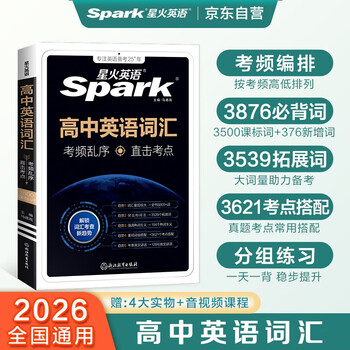
星火英语高中英语词汇考频乱序版高中一二三词汇必背新课标2026高考英语单词书高频短语真题知识手册大词量全国通用核心词汇
一、 核心特征:以 -ics 结尾的“单数学科”
这是学科名词中最具特色、也最易出错的一类。它们形式上是复数,但语法上通常作单数名词处理。
- 典型成员:
mathematics(数学),physics(物理),economics(经济学),politics(政治学),linguistics(语言学),statistics(统计学,作为“学科”时为单数,作为“统计数据”时为复数)。 - 语法规则:当这些词指学科领域本身时,视为不可数单数名词,谓语动词用单数。
- 例:Physics is the study of matter and energy.(物理学是研究物质和能量的学科。)
- 例:Economics has always been his major interest.(经济学一直是他主要的兴趣所在。)
- 常见错误:误将其用作复数。例如:
Physics are difficult.(×) →Physics is difficult.(√) - 缩略形式:
mathematics常缩略为math(美式)或maths(英式),此时仍为单数。
注意特例:个别以 -ics 结尾的词,如 politics,在指“政治观点”时,可作复数。例:His politics are rather conservative.(他的政治观点相当保守。)
二、 其他学科名词的分类与用法
1. 基础人文与自然科学
chemistry(化学),biology(生物),geography(地理),history(历史),philosophy(哲学),literature(文学),psychology(心理学),sociology(社会学).- 用法:这些词直接指学科,通常为不可数名词,作单数。但在特指某国、某时期的“具体文学/历史”时,可加冠词。
- 例:We study Chinese history.(我们学习中国历史。)/ The history of the town is fascinating.(这个小镇的历史很迷人。)
2. 语言类学科
English,Chinese,French,language.- 用法:直接指语言时,为不可数名词,首字母必须大写。
language作为泛指时小写。 - 例:She is good at English and French. / Language is a tool for communication.
3. 艺术与体育类
art(艺术),music(音乐),sports(体育,通常用复数),PE (Physical Education)(体育课).- 用法:
art和music作为学科或艺术形式总称时不可数;sports通常以复数形式出现。
4. 应用与职业导向学科
computer science(计算机科学),engineering(工程学),medicine(医学),law(法学),business(商科),management(管理学),accounting(会计学),finance(金融学),marketing(市场营销学),education(教育学).- 用法:这些词泛指该领域时,通常作不可数单数名词。注意
business,law,medicine等在表示“行业”、“领域”时不可数,但表示“具体事务”、“法律条文”、“药物”时另有可数用法。
三、 高考命题视角与高频考点
1. 语法填空与短文改错
- 直接考查主谓一致:以 -ics 结尾的学科名词作主语时,需填写单数谓语动词形式。这是经典考点。
- 考查冠词:学科名词前通常不加冠词。在短文改错中,多出的冠词(如
the mathematics)常是错误点。但当其被限定(如the history of China)或特指(如the English we learn)时,需加the。 - 词性转换:可能给出形容词,要求填写对应的学科名词(如:
economic → economics,psychological → psychology)。
2. 完形填空与阅读理解
- 构建校园与学术语境:在关于学习生活、教育话题、职业选择的文章中,学科名词是核心词汇。理解这些词,是把握文章主旨和细节的基础。
- 观点态度题线索:作者对不同学科的描述(如
challenging physics,fascinating literature)可能隐含其个人兴趣或价值判断。
3. 书面表达(作文)
学科名词在多个写作场景中至关重要,使用准确性能显著提升文章档次。
- 介绍学习生活:“My favorite subjects are chemistry and literature.”
- 阐述兴趣与理想:“I have a keen interest in computer science and hope to study engineering in college, as I believe technology can change the world.”
- 讨论社会现象:“The study of economics and sociology helps us understand social trends.” 或 “Physical Education is as important as academic subjects.”
常见写作错误:
- 大小写错误:
i like english.(×) →I like English.(√) - 单复数错误:
Economics are my major.(×) →Economics is my major.(√) - 冠词误加:
I find the philosophy interesting.(×,泛指哲学) →I find philosophy interesting.(√)
四、 实用搭配与学习策略
1. 常用动词搭配
- 学习/研究:study/learn/major in physics; be good at/poor in mathematics; have a class/lesson in chemistry.
- 教学:teach history; professor of law.
2. 高频“学科+”结构
- 学科 + teacher/professor/student:a physics teacher, a medicine student.
- 学科 + test/class/book:a biology test, a music class, a geography book.
3. 学习策略
- 归纳记忆:专门整理以 -ics 结尾的学科名词清单,强化其“形复意单”的概念。
- 语境造句:用每个学科名词造两个句子:一个说明其学科属性(用单数谓语),一个尝试其可能的其他含义(如
politics指观点)。 - 写作自查清单:在完成涉及学习或兴趣的作文后,重点检查:①学科名词首字母是否大写(语言类);②以 -ics 结尾的词,其谓语动词是否为单数;③学科名词前是否误加了不必要的冠词。
学科名词的准确运用,是英语学术素养的基本体现。它要求学习者不仅记住单词,更要理解其内在的语法逻辑。攻克这一知识点,能让你的英语表达在谈论学习、教育和职业规划时更加严谨、地道,从而在高考中更具竞争力。
【附:应用文示范】
题目:假设你是李华,你校英文报开设“My Academic Journey”(我的学业之旅)专栏,请你写一篇短文投稿,谈谈你对文理科学习的看法和你的选择。
Finding My Path: Between Equations and Essays
When the time came to choose between the science and arts tracks, I felt at a crossroads. My academic journey has been shaped by equal parts curiosity for the logical and appreciation for the human.
On one hand, the world of science fascinates me. Mathematics provides a universal language of logic, while physics reveals the fundamental rules of our universe. Chemistry experiments feel like unlocking nature’s secrets, and biology explains the very essence of life. Computer science and engineering represent the power to build our future. The clarity and predictability in these fields are deeply appealing.
On the other hand, the humanities speak to a different part of my soul. History is not just dates but lessons from the past. Literature opens windows into countless lives and emotions. Philosophy challenges me to think critically about existence, and psychology helps understand the mind. Through economics and politics, I learn how societies function. Art and music are the expressions of human creativity that no equation can capture.
This internal debate felt like studying both physics and philosophy at once—one seeking concrete answers, the other pondering unanswerable questions. My education so far in both areas has been invaluable.
After much reflection, I’ve chosen the science track, with a focus on biology and chemistry, aiming for a future in medicine. I believe the rigor of scientific education will equip me with the skills to solve tangible problems. However, I refuse to let go of the arts. I will continue reading literature, appreciating art, and following political developments. I see business and management skills as useful for any career, and understanding basic law is essential for every citizen.
In conclusion, I don‘t see this as a final separation. True innovation often happens at the intersection, like psychology informing technology design, or economics affecting public policy. My choice is not to abandon one for the other, but to build a foundation in science while keeping the door to the humanities always open. After all, both are essential chapters in the grand story of human knowledge.
(本篇短文共使用学科名词:Mathematics, physics, Chemistry, biology, Computer science, engineering, History, Literature, Philosophy, psychology, economics, politics, Art, music, physics, philosophy, education, biology, chemistry, medicine, education, literature, art, political, business, management, law, psychology, economics, policy,共计30个,涵盖了列表中的绝大部分词汇,并体现了其单数用法及在语境中的自然融合。)